Santuario della B.V. di Rio Secco
25070 Capovalle (BS)
Loc. Rio Secco
Italia
Parish Church of Capovalle – St. John the Baptist
The Church of St. John the Baptist is the spiritual core of the community of Capovalle (BS), in the Upper Valle Sabbia. It is not only a place of worship, but it also witnesses the religious, artistic and social events of the village.
It is part of the pastoral area of the Upper Val Sabbia in the Diocese of Brescia.
Capovalle, a mountain village with 339 inhabitants, has St. John the Baptist as its patron saint, celebrated on the 24th of June.
History
Local traditions and origins
According to local tradition, the original chapel of Capovalle would rise on the ruins of a pagan temple dedicated to the god Saturn. In medieval times, as early as the 15th century, a church was built which, according to legend, received indulgences from Pope Alexander III during one of his visits to the village. Originally, Capovalle depended on the parish church of Santa Maria of Idro. During the 17th century, the community obtained parish autonomy.
New construction and consecration
In 1724, the first stone of the current building was laid, thanks to the efforts of parish priest Don Gerolamo Bernardi, who wanted to give the community a suitable place of worship. The construction was entrusted to the Milanese architects Domenico Pedazzi and Cristoforo Borri. The building was completed by the end of 1731, while the consecration took place in 1748.
Towards the end of the 19th century, an enlargement was made on the initiative of the parish priest Giuseppe Rizzetti. During the 20th century, a series of restorations were carried out to keep the building in good condition.
Architecture and art
Exterior
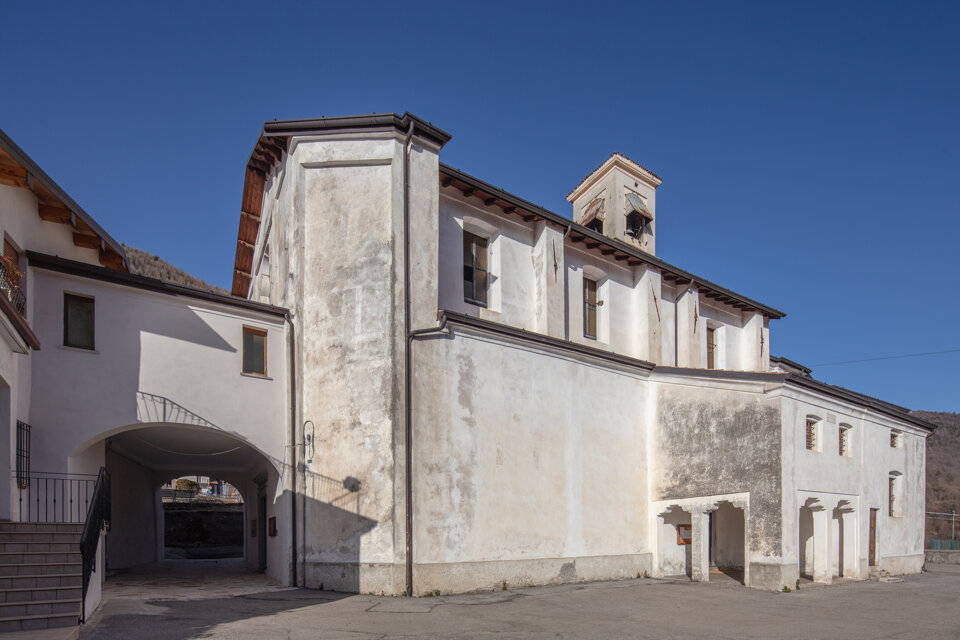
The church is located in the centre of the village, in Paolo VI Street (address of the parish). The façade is preceded by a portico that connects it to the rectory in front of the church, a characteristic element that creates a natural passageway.
The façade is simple: an entrance portal, a mixed-line window above and clean lines that enhance its sobriety. Adjacent to the church stands the bell tower, marked by string-course frames and with single-lancet windows on the four sides of the belfry. The bell tower houses five bells in E3, dated 1899, 1923 and 1961, which are rung according to the “Ambrosian system”.
Interior
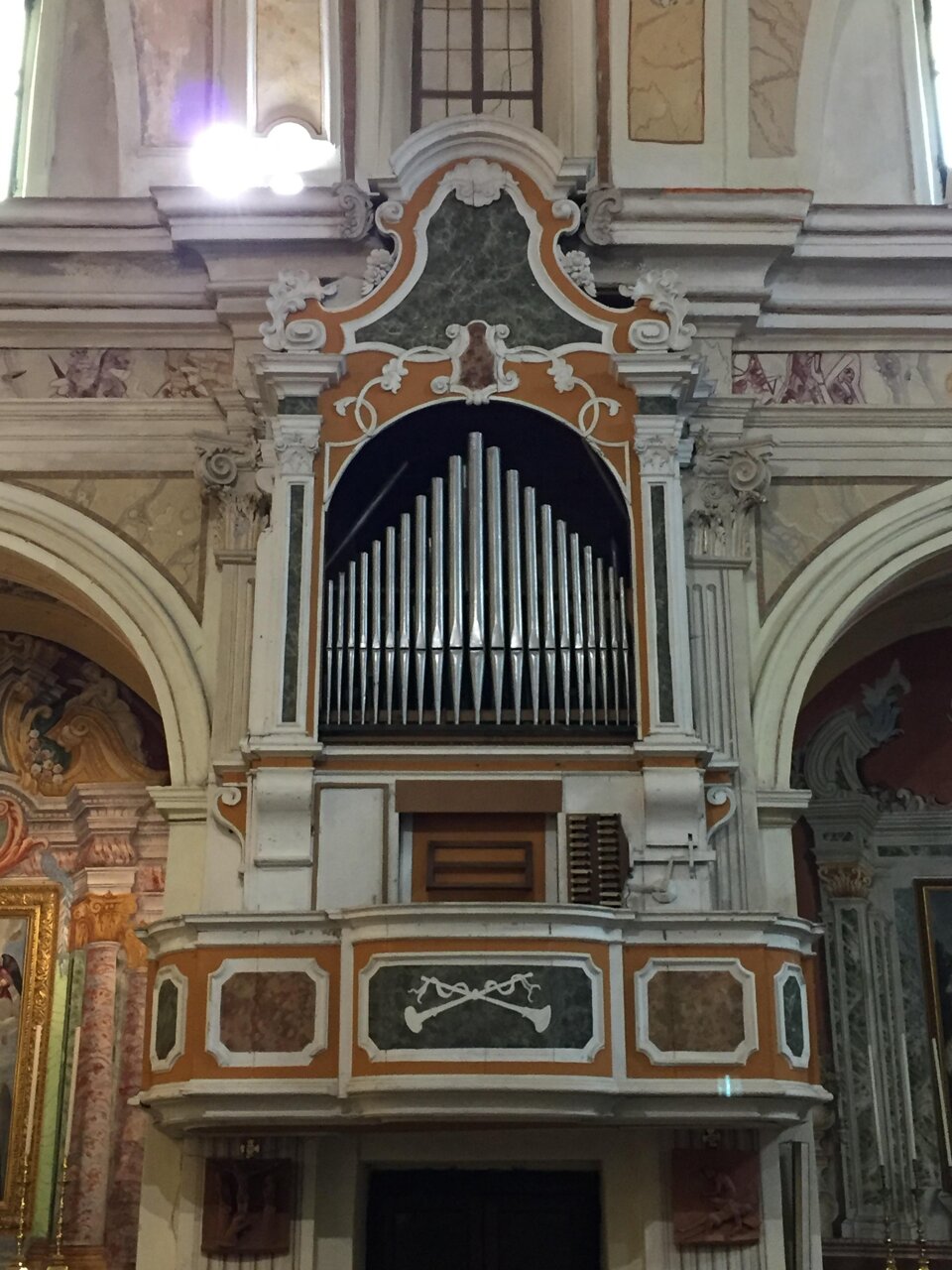
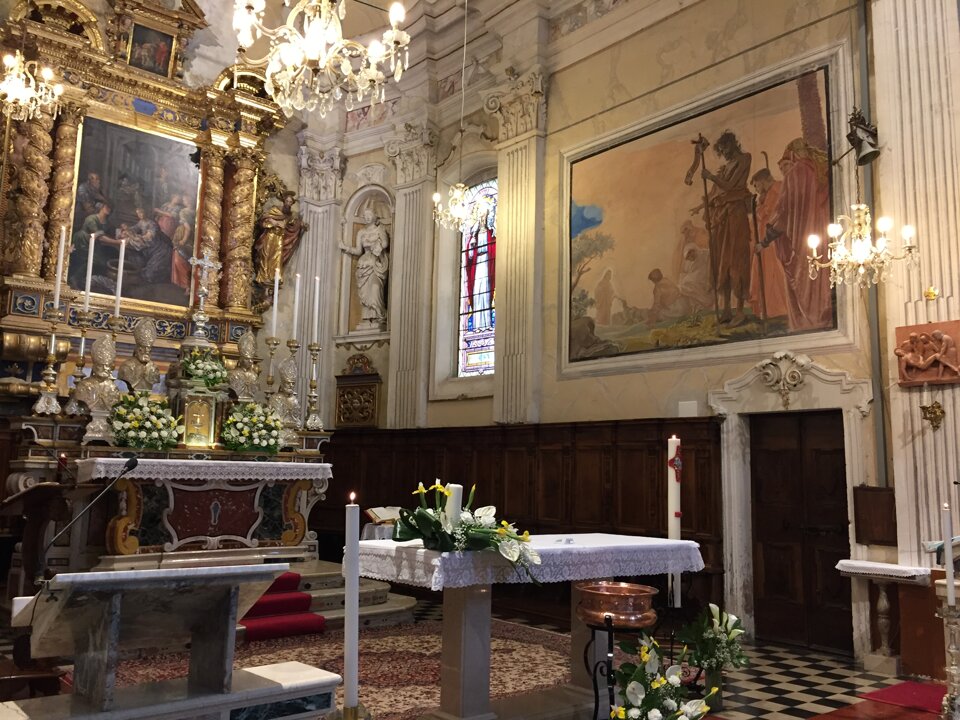
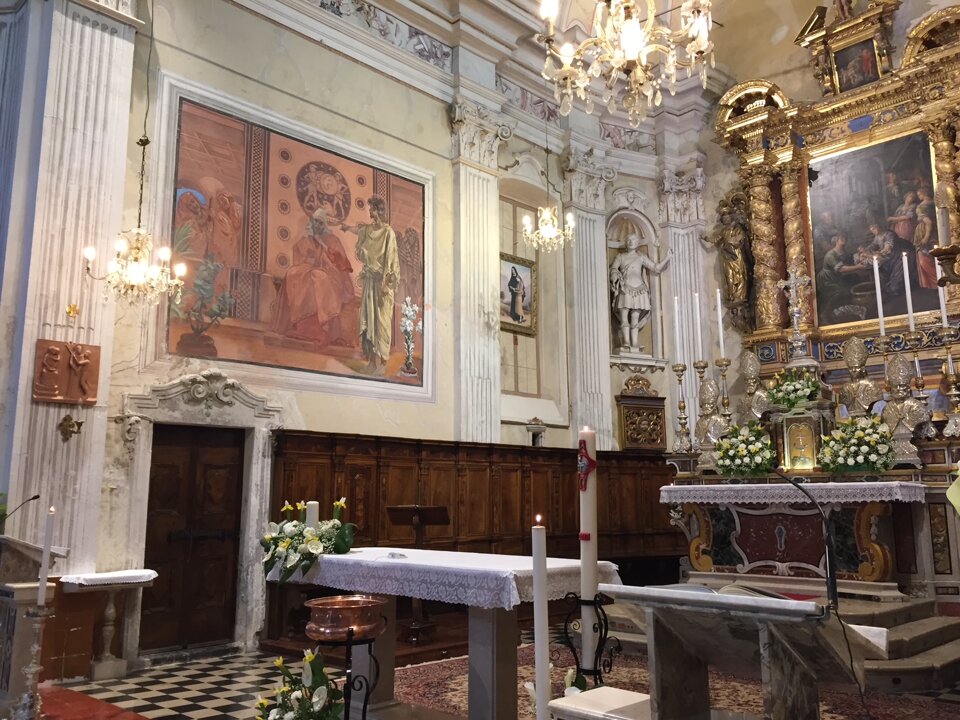
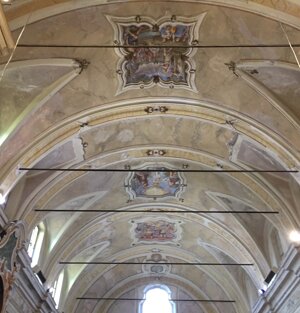
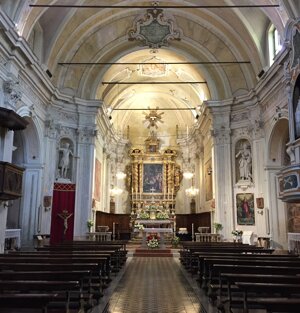
The interior has a single nave covered by a barrel vault. The side windows diffuse light that harmoniously lights up the hall, while on the right wall there is the choir stall that houses the organ.
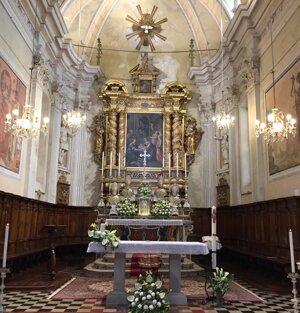
The presbytery is raised by a few steps and ends with an apse that houses the high altar.
Artistic works
The church houses valuable works of art, including:
• Three altarpieces by Andrea Celesti, depicting the Baptism of Jesus, the Blessed Virgin of the Assumption and the Nativity of St. John the Baptist.
• A canvas depicting Saints Anthony the Abbot, Roch and Sebastian, from the Veronese school.
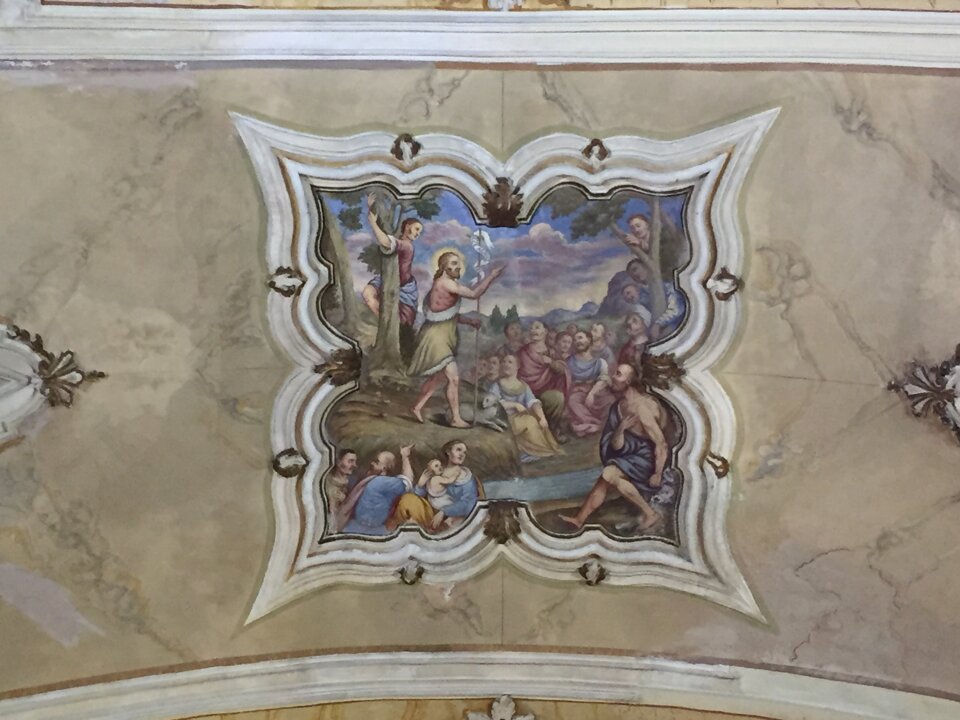
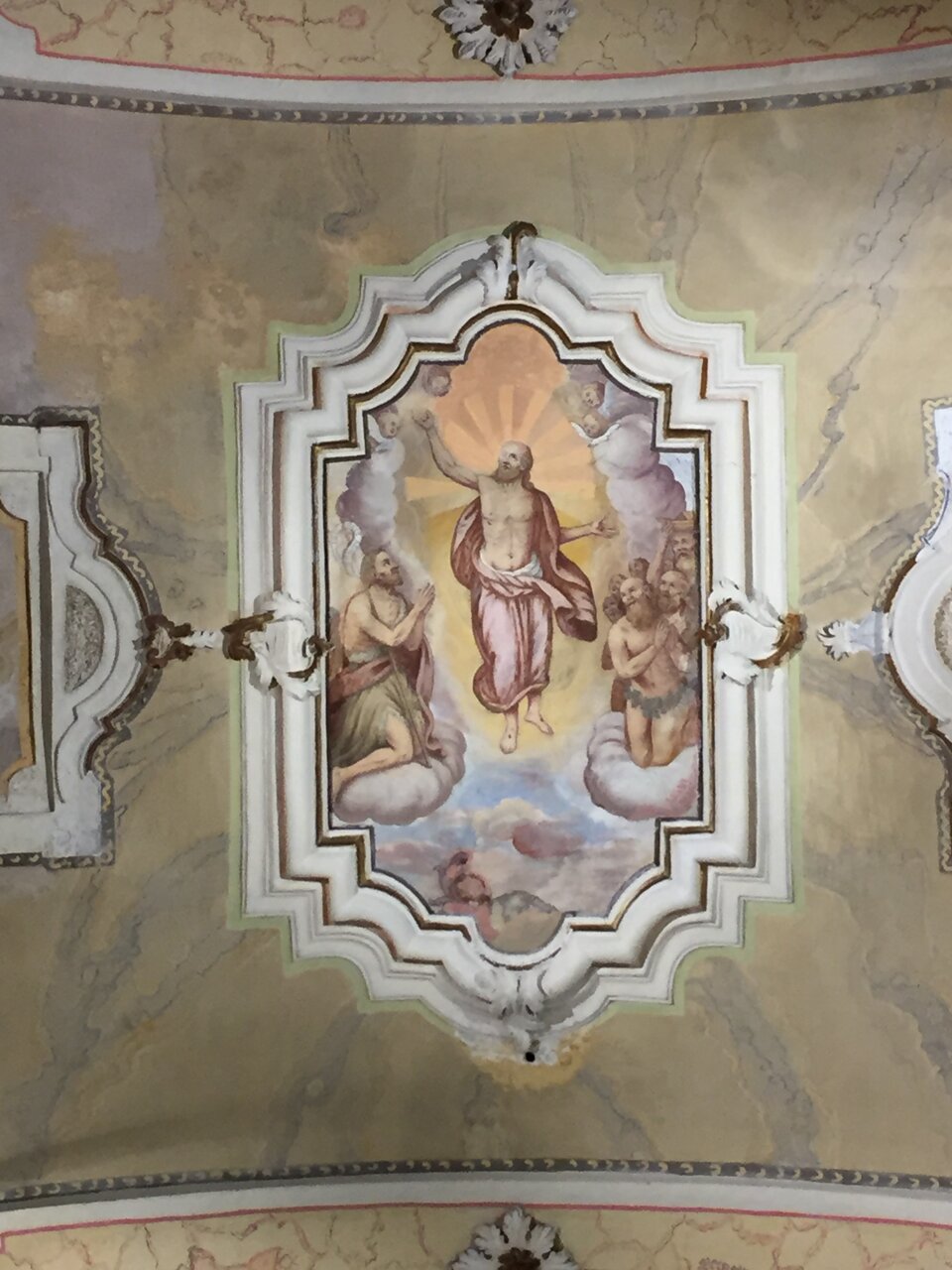
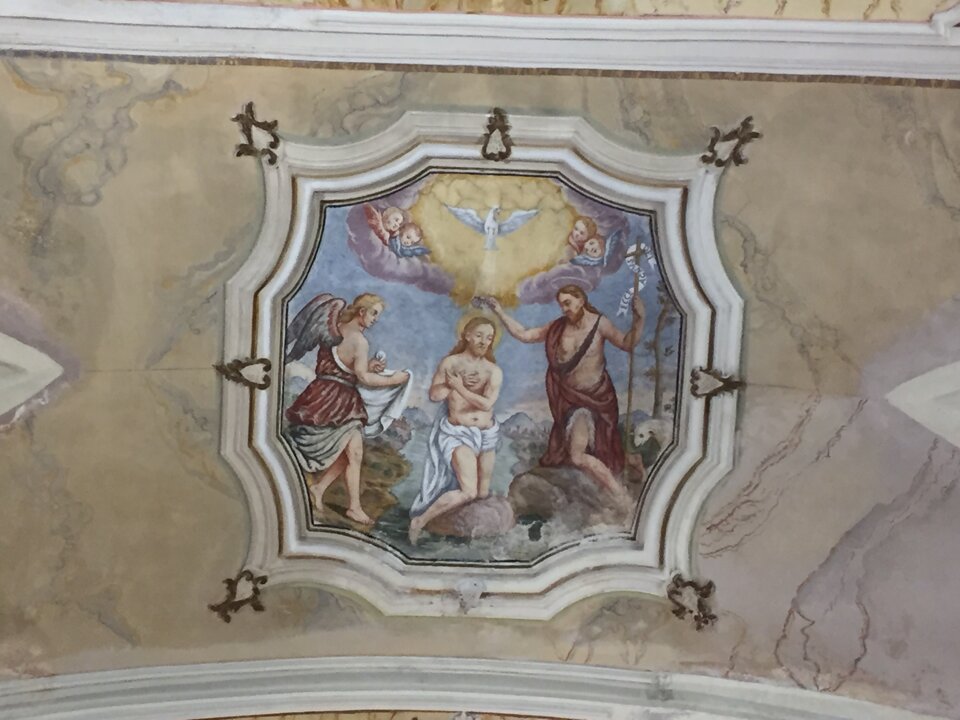
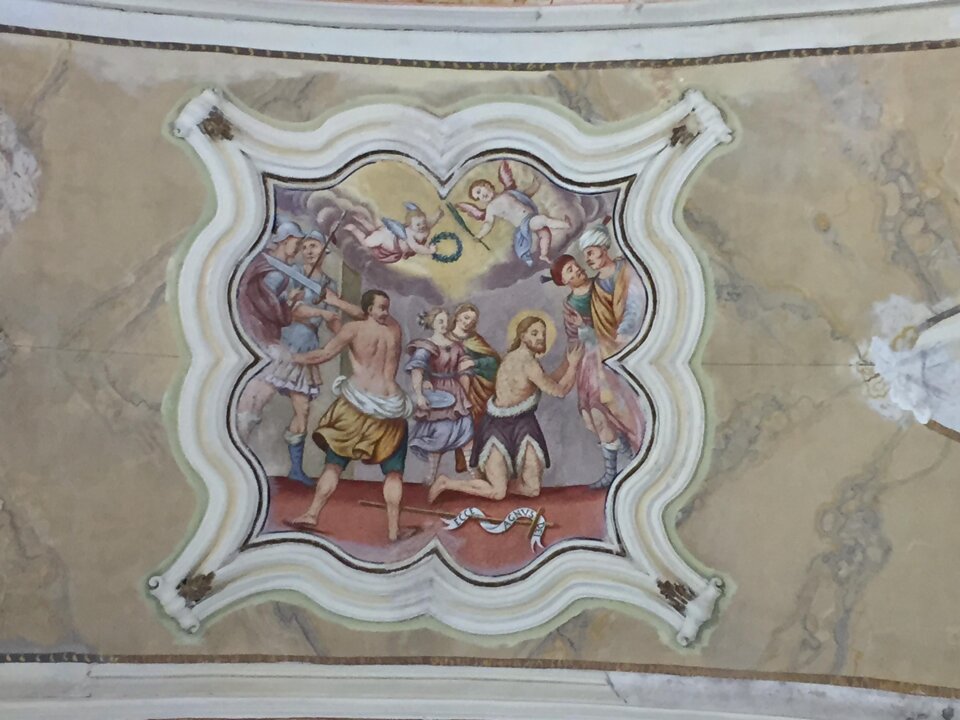
• Medallions depicting: Jesus in the Garden, the Baptism of Jesus, St. John at the Jordan
and the Risen Christ.
• The Stations of the Cross, made by the artist Lusetti in 1952.
• The organ, built in 1846 by Francesco Marchesini.
• The medallions in the presbytery, depicting St. John the Baptist with his disciples, the Good Shepherd and the scene of the Baptist and Herod, painted by Vittorio Trainini in 1958.
These elements prove that the church is not only a liturgical container, but also a guardian of artistic and spiritual values collected over time.